
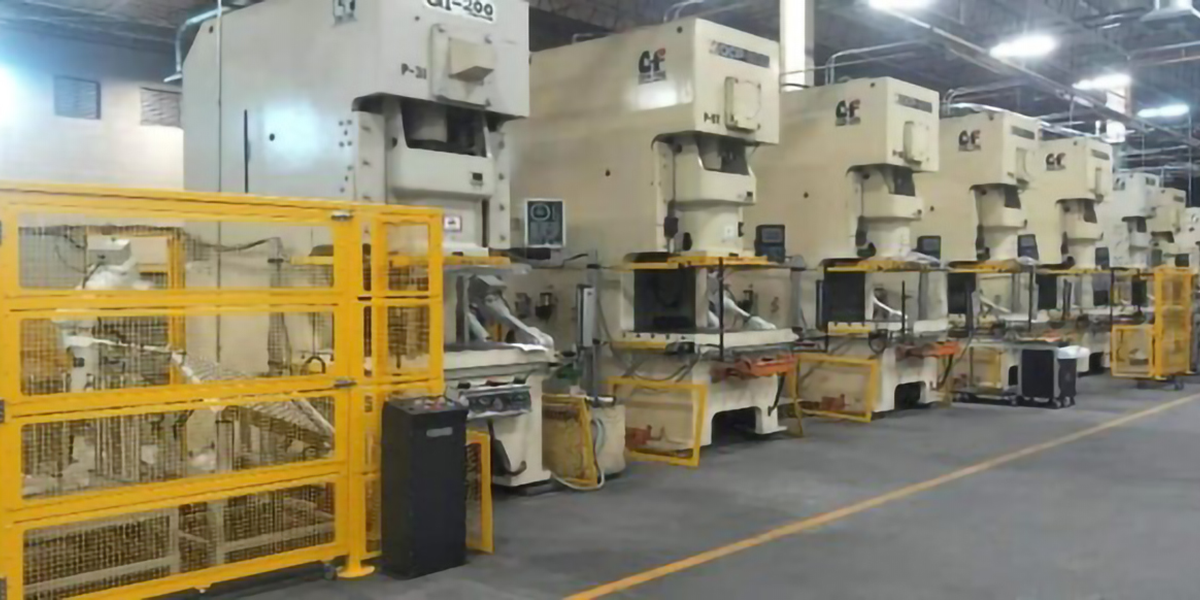
Stamping automation represents a comprehensive solution designed to optimize the stamping process by integrating stamping equipment, robots, and transfer plates. This innovative approach enhances productivity, precision, and efficiency in metal stamping operations. Here’s how each component contributes to the overall automation system:
1. Stamping Equipment: Stamping equipment forms the core of the automation system, comprising presses, dies, and associated machinery used to shape and cut metal sheets. These machines are equipped with advanced features such as programmable controls, servo motors, and hydraulic systems to ensure precise and consistent stamping operations.
2. Robots: Robots play a crucial role in automating various tasks within the stamping process, including material handling, part manipulation, and quality inspection. They are equipped with specialized end-effectors and sensors to perform tasks with speed, accuracy, and repeatability. By integrating robots into the automation system, manual labor is minimized, and production efficiency is maximized.
3. Transfer Plates: Transfer plates are essential components that facilitate the movement of stamped parts between different stages of the production line. They act as conveyors, transferring workpieces from one station to another in a controlled and synchronized manner. Transfer plates are designed to accommodate various part sizes and shapes, ensuring smooth and efficient material flow throughout the stamping process.
Key Benefits of Stamping Automation:
- Increased Productivity: Automation minimizes downtime and maximizes throughput by streamlining the stamping process and reducing cycle times. With faster production rates, manufacturers can meet customer demand more effectively and capitalize on new business opportunities.
- Enhanced Precision: Automation ensures consistent part quality and dimensional accuracy by eliminating variations associated with manual labor. Robots and precision controls enable tight tolerances and precise positioning, resulting in high-quality stamped parts that meet or exceed industry standards.
- Improved Safety: By automating repetitive and hazardous tasks, such as heavy lifting and material handling, automation improves workplace safety and reduces the risk of accidents and injuries. Operators are freed from dangerous tasks, allowing them to focus on higher-value activities that require human expertise.
- Cost Savings: Although the initial investment in automation equipment may be significant, the long-term cost savings are substantial. Automation reduces labor costs, minimizes scrap and rework, and optimizes resource utilization, resulting in improved profitability and a higher return on investment over time.
- Flexibility and Scalability: Stamping automation systems are adaptable to changing production requirements and can be easily reconfigured to accommodate different part geometries and production volumes. This flexibility allows manufacturers to respond quickly to market demands and stay competitive in dynamic industries.
In summary, stamping automation offers a wide range of benefits, including increased productivity, enhanced precision, improved safety, cost savings, and flexibility. By integrating stamping equipment, robots, and transfer plates, manufacturers can streamline their operations, boost efficiency, and achieve greater success in the highly competitive stamping industry.